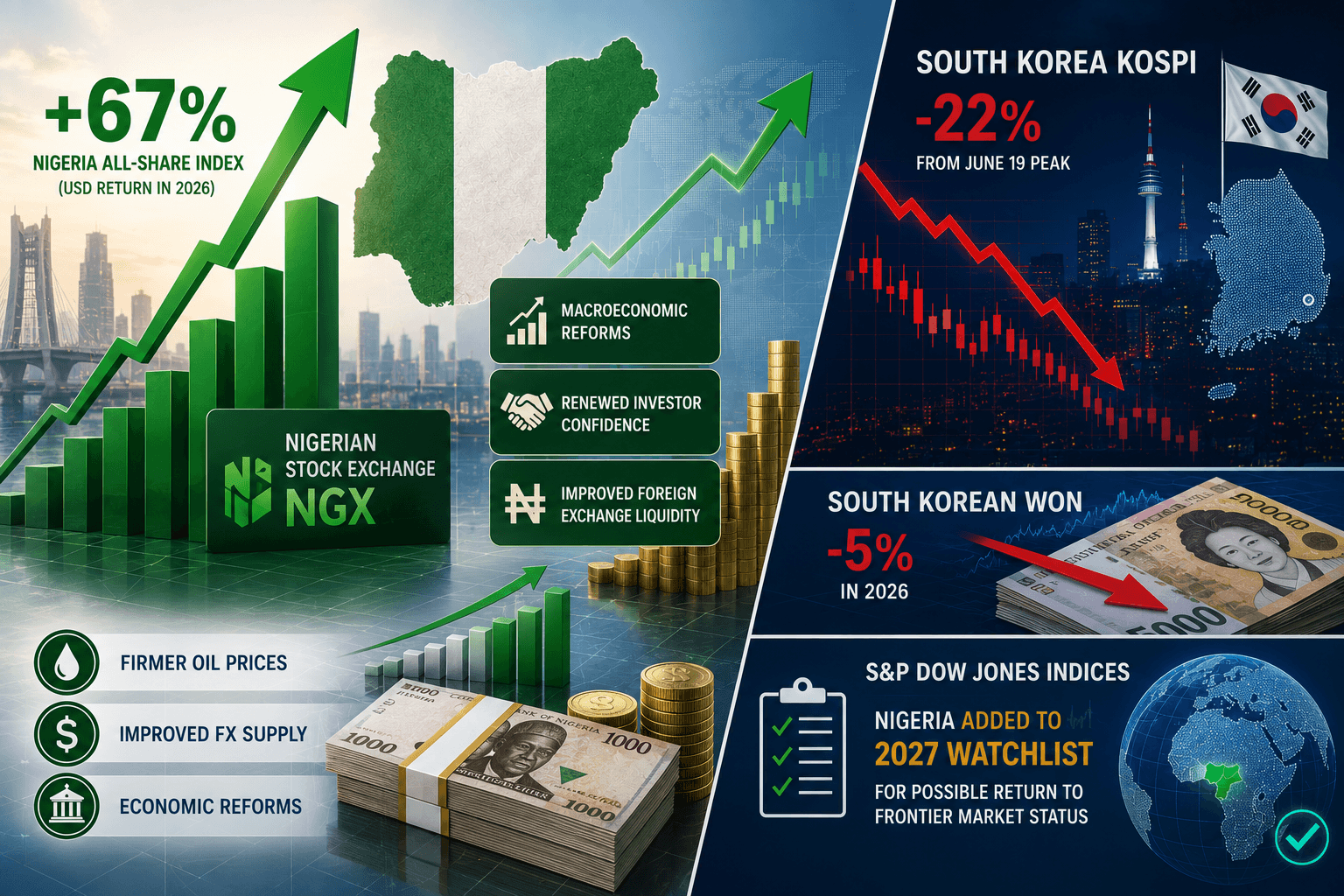
After nearly a decade, ExxonMobil returns to Nigeria with $1billion deal
ExxonMobil has returned to Nigeria with about $1 billion deepwater oil project after nearly a decade away from drilling. The development is expected to add 40,000 barrels of crude oil per day as Africa's largest producer seeks to revive investment and reverse years of declining output.
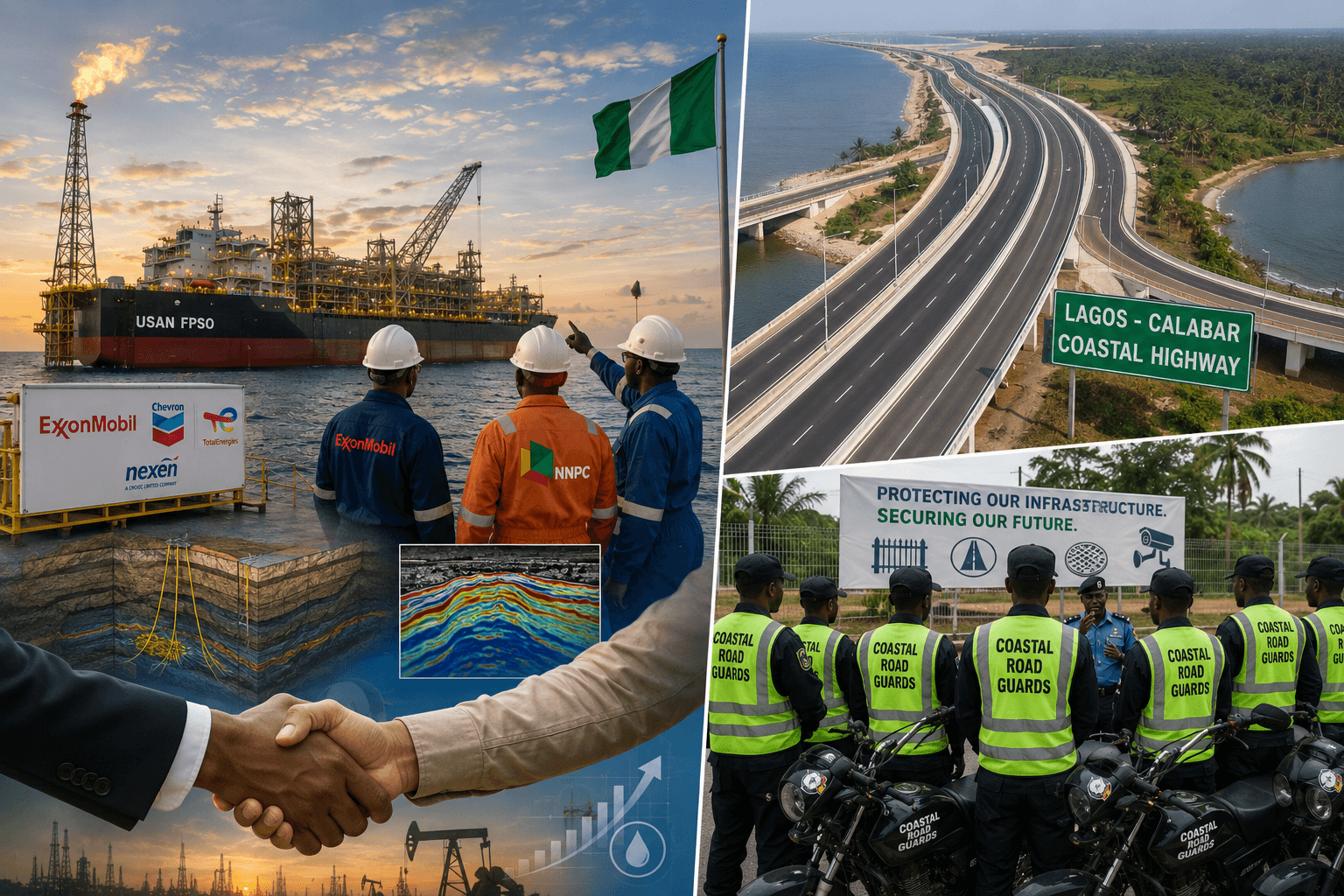
The US oil major, through its Nigerian affiliate Esso Exploration and Production Nigeria (Offshore East) Limited, has commenced work on the Usan Infill Project in Oil Mining Lease (OML) 138, marking its first drilling campaign in Nigeria since 2016.
The investment, announced on Wednesday during NOG Energy Week in Abuja, is expected to deliver first oil within 18 months and increase production from the Usan Floating Production, Storage and Offloading (FPSO) facility through new infill wells identified after seismic studies completed in 2024.
The $1 billion project is being funded by Esso and its partners in OML 138, Chevron, TotalEnergies and Nexen, a subsidiary of China’s CNOOC, under a production-sharing contract with NNPC Ltd.
The announcement is significant for Nigeria’s oil industry where international energy companies have scaled back investment over the past decade amid regulatory uncertainty, security concerns, crude theft and years of underinvestment.
While several majors have exited onshore and shallow-water assets, many have shifted their focus to deepwater projects, which are considered more secure and commercially attractive.
The investment also signals growing confidence in reforms introduced under Nigeria’s Petroleum Industry Act (PIA), which the government hopes will unlock fresh upstream capital and help restore crude production.
“This initiative carries particular importance as it aligns with the commission’s objective to revitalise activity within Nigeria’s deepwater assets,” Chief Executive of the Nigerian Upstream Petroleum Regulatory Commission (NUPRC), Oritsemyiwa Eyesan, said at the project launch.
“With Esso’s last drilling operation dating back to 2016, the resumption of drilling signals renewed potential and value in our deepwater acreage.”
Eyesan described the project as a strategic investment that demonstrates how targeted spending on existing assets can quickly boost production.
“One billion dollars invested to unlock 40,000 barrels of oil. This initiative carries particular importance as it aligns with the commission’s objective to revitalise activity within Nigeria’s deepwater assets,” she said.
She added that the investment comes at a critical time for Nigeria’s offshore industry.
“Many of our deepwater assets are operating with low capacity today. For the past 10 years, not much has happened, and I think this is a commendable effort by Esso.”
ExxonMobil said the Usan Infill Project forms part of its long-term strategy to strengthen its deepwater portfolio in Nigeria following the divestment of most of its shallow-water assets.
“The start of the Usan Infill Project reflects ExxonMobil’s continued focus on developing our deepwater portfolio in Nigeria,” Jagir Baxi, chairman and managing director of ExxonMobil affiliates in Nigeria, said.
“By applying advanced technology and leveraging our proven execution capabilities, we aim to safely and efficiently increase production and deliver value for our stakeholders while supporting Nigeria’s economic development.”
According to the company, the project follows high-quality seismic data acquisition and processing completed in 2024, which identified new drilling opportunities within the Usan field.
It also acknowledged support from the NUPRC, the Nigerian Content Development and Monitoring Board (NCDMB), NNPC Ltd. and its joint venture partners in bringing the project to execution.
The Usan field, located offshore in OML 138, has been producing since 2012. Rather than developing an entirely new oilfield, the infill project targets additional reserves around existing infrastructure, allowing production to increase more quickly and at lower cost than building a new deepwater development from scratch.
The project comes as Nigeria intensifies efforts to restore crude production and attract fresh exploration spending.
During the same event, the NUPRC presented 19 petroleum prospecting licences awarded under the 2022/2023 Mini Bid Round and the 2024 Licensing Round as part of broader efforts to stimulate upstream investment.
Africa’s largest oil producer has struggled to consistently meet its production targets in recent years because of oil theft, pipeline vandalism, ageing infrastructure and delayed investment decisions.
The government is banking on renewed offshore investment from companies such as ExxonMobil to increase production, boost government revenues and strengthen long-term energy security.
40 youths secure employment on Lagos-Calabar highway
No fewer than 40 youths drawn from host communities have been employed and trained to protect the multi-billion Lagos-Calabar highway.
The Federal Ministry of Works trained them to avoid vandalism and other illegal activities on the corridor.
Trained by the Nigeria Police Force in Lagos, the newly-employed youths will work in shifts, with 20 on daytime patrol and 20 on night duty.
The Federal Controller of Works in Lagos, Mr Olufemi Dare, said the initiative was directed by the Minister of Works, Sen. Dave Umahi, to safeguard the highway from increasing cases of vandalism and misuse.
Dare said the guards would complement the police by monitoring the corridor and reporting offenders, stressing that they were not police officers and would only hand over suspects to the police for prosecution.
According to him, the government has recorded persistent theft of critical infrastructure, including clear-view steel fences, manhole covers and directional signs installed along the highway.
He disclosed that vandals had stolen about one kilometre of the steel fence and repeatedly removed manhole covers over an 18-kilometre stretch of the road despite replacements by contractors.
"We must not allow this huge investment by the Federal Government to be destroyed by criminals.
"The President and the Minister of Works are committed to protecting this project, which is why these 40 youths have been engaged to support the police," he said.
Dare warned scavengers operating under the guise of collecting scrap metal, illegal refuse dumpers, commercial motorcycles (Okada), tricycles (Keke Marwa), stationary trucks and roaming livestock would no longer be tolerated on the superhighway.
He said the ministry had procured 20 brand-new motorcycles, branded "Coastal Road Guards", to support the patrol teams.
He added that the guards' activities would be closely monitored, warning that any member found engaging in misconduct or criminal activities would be arrested and prosecuted.
The controller also said the ministry was collaborating with the Lagos State Government and relevant agencies to address indiscriminate refuse dumping along the corridor.
He warned that anyone caught dumping refuse on the highway would face the full weight of the law.
Ajasa warned them against extortion, abuse of authority and jungle justice, stressing that they must always hand over suspects to the police.
"You are not there to collect money from anybody. If anyone is found extorting road users or abusing the assignment, the police will not spare such a person," he said.
He urged the recruits to prioritise intelligence gathering, document offences with cameras or mobile phones where necessary and work only within their assigned communities.
Community Relations Manager of HITEC Construction Company, Mr David Omaghomi, said the initiative aligned with the contractor's community engagement strategy aimed at ensuring sustainable infrastructure delivery.
Omaghomi said the security arrangement was designed to strengthen intelligence gathering and surveillance rather than create an armed enforcement outfit.
"Our responsibility is to provide information, monitor activities and quickly alert the police whenever vandalism occurs.
"We are the eyes and ears of the security architecture because we are closest to the communities," he said.
He noted that investigations had shown that most of the vandalism was perpetrated by outsiders rather than host communities, urging residents to protect their reputation by exposing criminals.
Omaghomi added that community representatives involved in the initiative could be replaced if found wanting.
Speaking on behalf of the recruits, the Assistant Team Lead of the Coastal Highway Security Guards, Mr Kelvin Okereke, commended President Bola Tinubu and the Minister of Works for the initiative.
Okereke assured the ministry and Nigerians that the security guards would protect the highway and its infrastructure from vandalism.
He pledged that the team would remain committed to safeguarding manholes, fencing, road furniture and other public assets along the corridor.
The Lagos-Calabar Coastal Highway is one of the Federal Government's flagship road infrastructure projects aimed at improving connectivity, trade and economic development across Nigeria's coastal states.